Description
Wallet Drainer Contract Recovery for Stolen Cryptocurrency
A wallet drainer contract recovery case begins when cryptocurrency disappears after a victim connects a wallet to a malicious website, signs an approval, interacts with a fraudulent decentralized application, or authorizes a transaction they did not fully understand.
Wallet drainer attacks can affect users holding tokens on compatible blockchain networks. A victim may believe they are claiming an airdrop, minting an NFT, completing a swap, validating a wallet, or participating in a presale. Instead, the transaction or token approval may give a malicious contract permission to move eligible assets.
When this happens, the first priority is to understand exactly what occurred.
Our wallet drainer contract recovery service focuses on transaction analysis, smart-contract activity, wallet tracing, and evidence organization. The objective is to determine how the assets moved after the malicious interaction and whether there are identifiable destinations that may provide useful investigative leads.
A blockchain transaction generally cannot simply be reversed after confirmation. Therefore, wallet drainer contract recovery is not the same as clicking a button that automatically returns stolen funds. Recovery depends on circumstances surrounding the theft, where the assets moved, whether they remain accessible, and whether an identifiable service or intermediary is involved.
For victims who need a structured investigation, you can begin through our Case Evaluation.
What Is a Wallet Drainer Contract?
A wallet drainer contract is malicious or deceptive smart-contract functionality designed to cause a user to authorize transactions or token permissions that benefit an attacker.
The source material describes the typical sequence as:
- The victim visits a fake website.
- The victim connects a cryptocurrency wallet.
- The website requests an approval or signature.
- The victim authorizes the transaction.
- The malicious contract or related wallet activity moves assets.
- The victim discovers that cryptocurrency has disappeared.
This sequence is important for wallet drainer contract recovery because investigators need to distinguish between what the victim intentionally approved and what happened afterward.
A blockchain investigation can examine transaction hashes, wallet addresses, token movements, contract interactions, timestamps, and destination addresses.
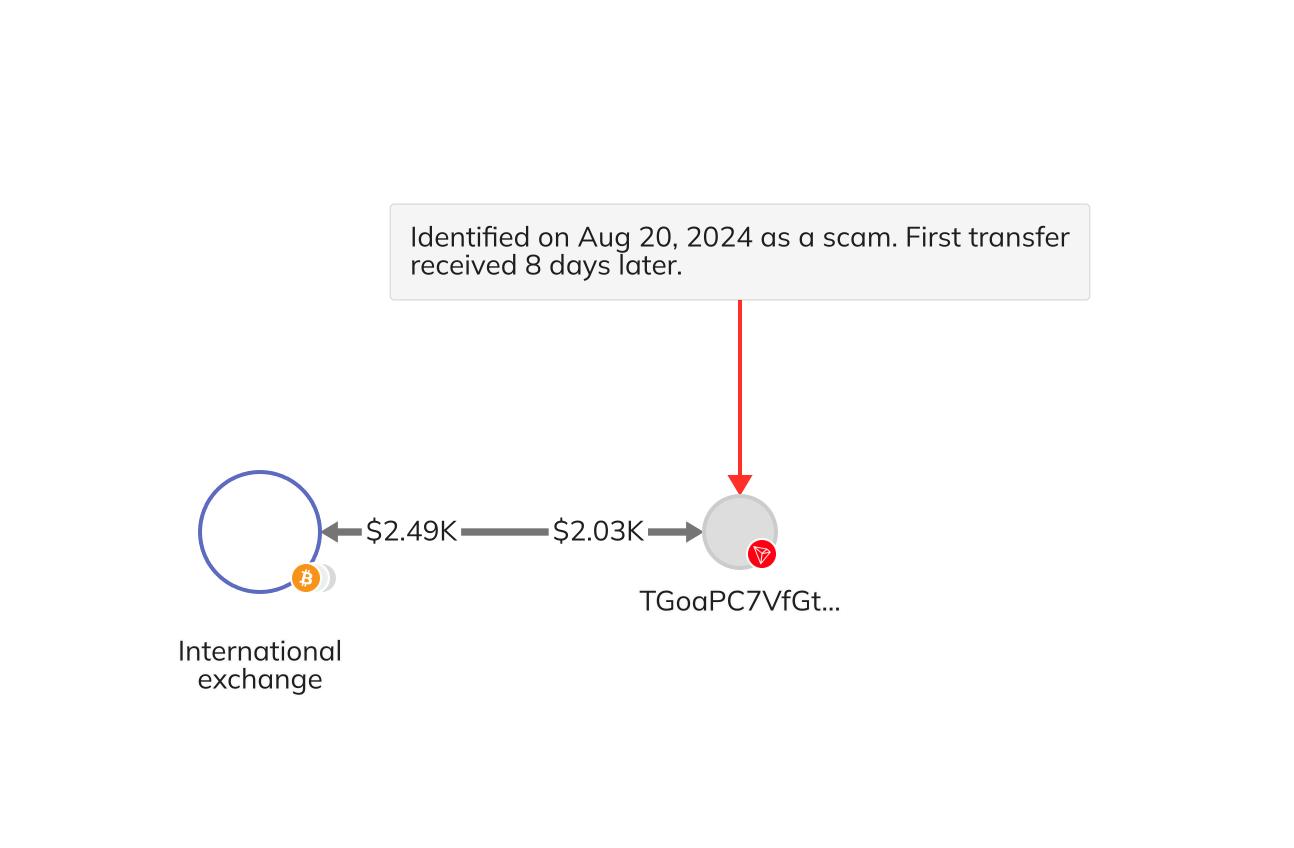
If the stolen cryptocurrency later reaches a centralized exchange, bridge, service, or other identifiable infrastructure, that destination can become an important investigative lead.
However, a destination address alone does not automatically identify the person controlling it or guarantee that an exchange will freeze funds.
How Wallet Drainer Attacks Work
Understanding how a drainer operates is an important part of wallet drainer contract recovery.
Step 1: The Fake Website
The victim encounters a website that appears to be legitimate.
It may imitate:
- A popular NFT marketplace
- A cryptocurrency project
- A decentralized exchange
- A token claim page
- A blockchain service
- A legitimate wallet-support page
- A presale
- An airdrop campaign
The source specifically identifies fake airdrops, NFT mints, swap websites, presales, validation pages, and Discord giveaway scams as examples.
For this reason, a wallet drainer contract recovery investigation should preserve the original website address whenever possible.
Do not revisit a suspicious website merely to collect evidence if doing so could expose another wallet.
Step 2: Connecting the Wallet
The fraudulent website may ask the user to connect a wallet.
Depending on the blockchain and wallet involved, the victim might use a wallet such as MetaMask, Trust Wallet, Phantom, or another compatible application.
Connecting a wallet does not necessarily mean that funds are automatically stolen. The critical issue is what the user subsequently signs or authorizes.
That distinction matters in wallet drainer contract recovery because the investigation should identify the exact transaction or approval associated with the loss.
Step 3: The Approval or Signature
The website may display a message such as:
- “Claim your free tokens.”
- “Mint your NFT.”
- “Verify your wallet.”
- “Complete the swap.”
- “Activate your reward.”
- “Confirm eligibility.”
The user may then sign a transaction or authorize a token allowance.
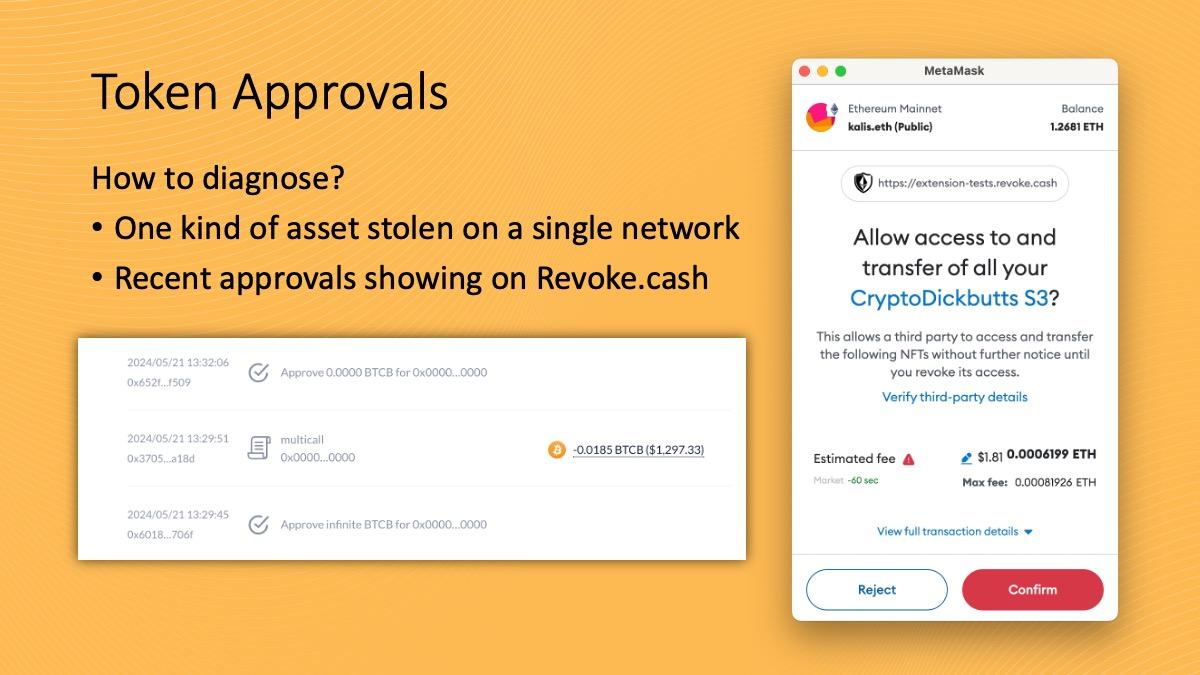
Depending on the contract and token standard, an approval can allow another address or contract to transfer tokens on behalf of the wallet.
This is why victims should not assume that every wallet signature is harmless.
A professional wallet drainer contract recovery investigation can examine the transaction and determine what contract was interacted with, what permission was granted, and what transfers followed.
Step 4: Asset Movement
After authorization, the attacker may move eligible tokens from the compromised wallet.
The source describes the sequence as a malicious approval giving the drainer permission to spend tokens followed by transfers to attacker-controlled addresses.
This creates an important blockchain trail.
Even when the victim does not know who the attacker is, investigators may be able to follow the transaction history from the original wallet to subsequent addresses.
That is one of the central purposes of wallet drainer contract recovery.
Common Wallet Drainer Scenarios
Wallet drainer attacks can appear in many forms.
Fake Airdrop Drainers
A fraudulent website promises free cryptocurrency and instructs users to connect their wallets.
The victim believes they are claiming tokens but instead signs an authorization that enables unauthorized asset movement.
Fake NFT Mint Drainers
A fake NFT collection or minting page may imitate a legitimate project.
The victim is encouraged to connect a wallet and approve a transaction.
The source specifically identifies fake NFT mint scams as a common drainer scenario.
Fake Swap Websites
A fraudulent exchange or decentralized application may imitate a legitimate trading interface.
A victim may believe they are swapping one asset for another while actually interacting with malicious contract logic.
Fake Presales
A scammer may advertise a cryptocurrency presale and instruct users to send funds or connect a wallet.
If assets are sent directly to a scammer-controlled address, the investigation will involve transaction tracing rather than simply analyzing a token approval.
Fake Wallet Validation
Some scams claim that a wallet must be “validated,” “secured,” or “verified.”
The victim may be instructed to connect the wallet and sign a transaction.
Discord and Social Media Giveaways
Scammers may advertise fake giveaways through social platforms, Discord communities, Telegram groups, or other communication channels.
The victim is redirected to a fraudulent website where the drainer interaction occurs.
Why Wallet Drainer Contract Recovery Requires Speed
Time can matter after a cryptocurrency theft.
Once stolen assets leave the original wallet, they may pass through multiple addresses, token swaps, bridges, decentralized protocols, or centralized services.
The longer an investigation waits, the more transaction activity may occur.
This does not mean that immediate action guarantees recovery. It means that preserving evidence and understanding the transaction path early can make the investigation more organized.
If your wallet has been affected, begin by documenting:
- Your wallet address
- Transaction hashes
- Approximate time of the incident
- Website URL
- Contract address
- Token names
- Amounts transferred
- Screenshots
- Wallet notifications
- Emails or messages associated with the scam
Do not provide anyone with your seed phrase or private key.
Our Privacy Policy explains how information submitted through the website is handled.
Wallet Drainer Contract Recovery: Can Stolen Crypto Be Recovered?
Wallet drainer contract recovery may be possible in some circumstances, but recovery cannot be guaranteed.
This distinction is extremely important.
A blockchain transaction that has been confirmed is generally not like a bank transfer that can simply be canceled from a customer dashboard.
A recovery investigation may instead involve:
- Identifying the unauthorized transaction.
- Following the stolen assets.
- Mapping related wallet addresses.
- Identifying exchange or service destinations.
- Organizing evidence.
- Determining what practical next steps may be available.
If funds reach a centralized exchange, the exchange may have its own policies and procedures for responding to reports of suspected theft or fraud.
For example, victims may need to provide transaction information when communicating with an exchange such as Binance, Coinbase, or Kraken.
An exchange deposit is an investigative lead, not proof that an account can automatically be frozen or that funds will be returned.
Wallet Drainer Contract Recovery vs. Blockchain Tracing
These terms should not be confused.
Blockchain Tracing
Blockchain tracing means following cryptocurrency transactions from one address to another.
Wallet Drainer Contract Recovery
Wallet drainer contract recovery involves investigating the drainer-related transaction activity and assessing whether the stolen assets may be traceable toward identifiable destinations or services.
Asset Recovery
Recovery means actually obtaining the assets back.
Tracing can provide evidence without resulting in recovery.
For example, investigators may determine that stolen USDT moved through several addresses and eventually reached a centralized exchange. That information may be valuable, but it does not itself guarantee that the exchange will return the funds.
Our Blockchain Forensic Investigation service can be relevant when a case requires broader transaction and evidence analysis.
What We Examine During Wallet Drainer Contract Recovery
A wallet drainer contract recovery investigation can examine several categories of blockchain evidence.
1. Original Wallet Activity
The investigation begins with the victim’s wallet address and the transactions surrounding the incident.
2. Transaction Hashes
Transaction hashes allow investigators to locate specific blockchain events.
Providing accurate transaction hashes can significantly improve the ability to reconstruct what happened.
3. Smart Contract Addresses
The contract involved in an approval or transaction can be examined to understand its relationship with the affected wallet.
4. Token Transfers
Investigators can examine which assets moved, when they moved, and where they were sent.
5. Destination Wallets
The next addresses receiving the stolen assets can be mapped.
6. Subsequent Transactions
Funds may move through additional wallets after leaving the original address.
Following these movements is a central part of wallet drainer contract recovery.
7. Exchange Deposits
If assets eventually reach an exchange-related address, that may provide a potential investigative lead.
Victims may also need to report the incident directly to the relevant platform.
Depending on the circumstances, users may encounter platforms such as OKX, Bybit, or Crypto.com.
Again, reaching an exchange does not automatically mean the funds will be frozen.
Our Wallet Drainer Contract Recovery Process
Step 1: Initial Case Assessment
The first step is to understand what happened.
Provide the relevant wallet address, transaction hash, website involved, approximate date and time, and a description of what you clicked or signed.
You can start through our Case Consultation.
Step 2: $99 Case Evaluation
The source product describes a $99 case evaluation.
The evaluation focuses on the available blockchain evidence and whether the transaction history can be reconstructed.
Step 3: Transaction Analysis
The relevant transactions are examined to determine:
- What contract was used
- What approval occurred
- What tokens moved
- Which addresses received the assets
- What happened afterward
Step 4: Wallet Tracing
The next stage follows the movement of the stolen cryptocurrency.
Multiple addresses may be involved.
In more complicated cases, investigators may need to reconstruct several transaction paths.
Step 5: Exchange or Service Destination Analysis
If the funds reach an identifiable exchange or service, the destination may become relevant to reporting and further investigation.
Additional platforms that may appear in crypto transaction trails include Gemini, Bitstamp, Bitfinex, and KuCoin.
Step 6: Recovery Assessment
After the transaction trail is analyzed, the available options can be assessed.
There is no guarantee that cryptocurrency will be recovered.
The outcome depends on the evidence, the blockchain activity, where the assets moved, and the response of relevant third parties.
What You Should Do Immediately After a Drainer Attack
If a malicious approval has been signed, take precautions before conducting further activity.
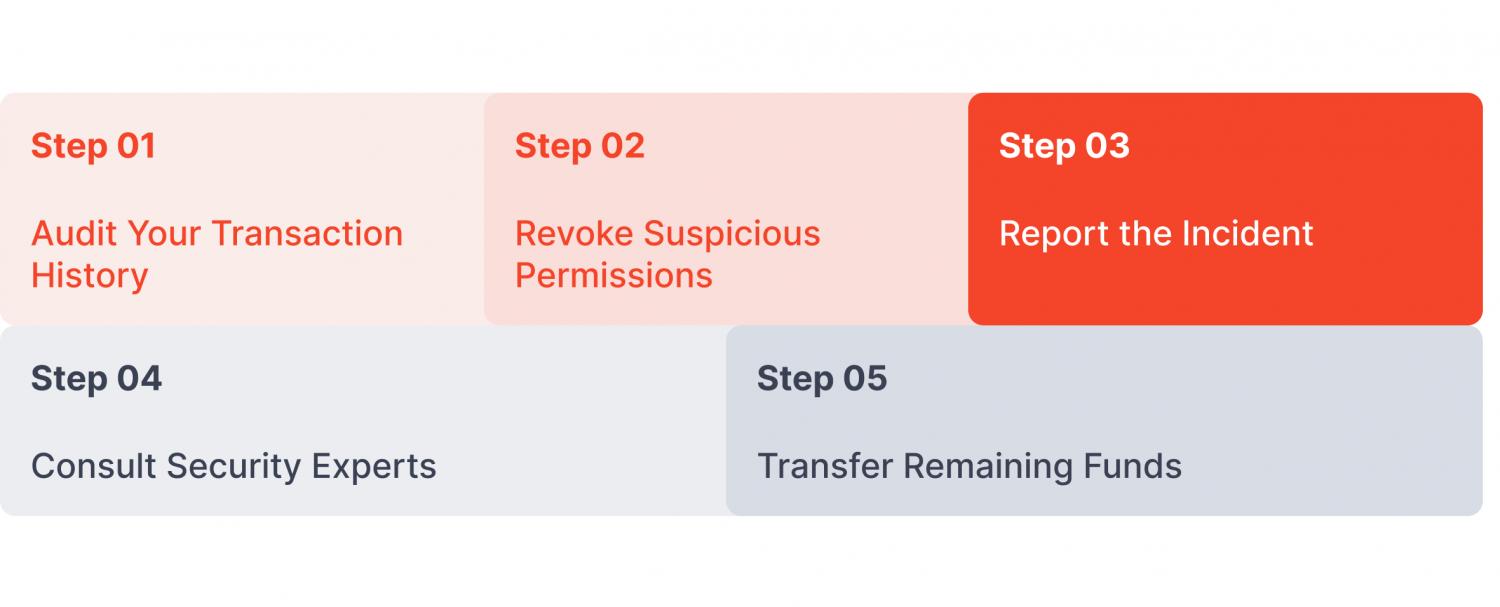
1. Stop interacting with the suspicious website
Do not reconnect the compromised wallet to the fraudulent website.
2. Protect remaining assets
If assets remain in the compromised wallet, consider moving them to a new secure wallet using safe wallet-management practices.
3. Review token approvals
Use a legitimate approval-management service and verify the exact domain before interacting with it.
The source specifically recommends using the legitimate revoke.cash website while warning users about fake versions of the site.
4. Preserve evidence
Keep screenshots, transaction hashes, website addresses, social-media messages, emails, and other information.
5. Do not send additional money
Scammers sometimes tell victims that another payment is required to “unlock,” “verify,” “tax,” or “release” cryptocurrency.
Be extremely cautious about additional payment requests.
6. Never provide your seed phrase
A legitimate investigator does not need your wallet’s private key or seed phrase to analyze publicly visible blockchain transactions.
Wallet Drainer Contract Recovery for Multiple Tokens
A single drainer interaction may affect multiple assets.
The source describes situations where several tokens can be drained from one wallet.
A proper investigation should therefore avoid looking at only one transaction.
Instead, the investigation may need to examine:
- All relevant token transfers
- Multiple transaction hashes
- Contract interactions
- Approval events
- Native cryptocurrency transfers
- Destination wallets
- Subsequent movement
If multiple tokens were affected, provide every relevant transaction hash available.
Our Crypto Asset Tracing Services page provides additional information about blockchain tracing and asset movement analysis.
Wallet Drainer Contract Recovery and Exchange Destinations
One of the most important developments in some investigations is the movement of stolen assets toward a centralized exchange.
However, an exchange deposit should be described accurately.
A blockchain address associated with an exchange does not automatically reveal the identity of a customer.
Likewise, it does not automatically mean the exchange will freeze the assets.
The appropriate approach is to document the transaction trail and provide the relevant evidence to the appropriate platform or authority.
Major exchange websites that may be relevant when reporting suspicious cryptocurrency activity include Binance, Coinbase, Kraken, OKX, Bybit, Crypto.com, Gemini, Bitfinex, Bitstamp, and KuCoin.
These links are provided as official platform resources; they should not be interpreted as a claim of partnership or guaranteed cooperation with Crypto Reverse Transaction.
Wallet Drainer Contract Recovery Case Analysis
The source provides a case example involving a victim who encountered a supposed free NFT mint.
According to the supplied product material, the victim connected a wallet and signed a transaction. The source states that approximately 4.2 ETH and USDC were subsequently drained, and that the funds were traced through three wallets toward a Bybit deposit address. It further states that funds were recovered after the exchange account was frozen.
Because this is a company-supplied case example rather than independently verified evidence presented in the source, it should be treated as an illustrative case study rather than a guaranteed or typical outcome.
The important investigative lesson is the transaction sequence:
Victim wallet → malicious interaction → unauthorized transfers → intermediary wallets → identifiable service destination.
That sequence illustrates why preserving transaction hashes and wallet addresses is essential to wallet drainer contract recovery.
Why Choose Crypto Reverse Transaction?
Crypto Reverse Transaction provides services focused on cryptocurrency transaction analysis, blockchain tracing, and scam-related investigations.
Our approach emphasizes evidence rather than promises.
Structured Blockchain Analysis
We examine transaction activity and relevant wallet addresses.
Smart Contract Investigation
Where applicable, we analyze the contract interactions associated with the suspected drainer.
Evidence Organization
Transaction hashes and blockchain records can be organized into a clearer timeline.
Exchange Destination Analysis
Where funds reach an identifiable service, the destination can be documented as part of the investigation.
Transparent Recovery Expectations
We do not treat tracing as proof of recovery.
Privacy and Security
You should never provide your seed phrase or private key to us or anyone claiming to perform a legitimate blockchain investigation.
For more information about our company and services, visit About Us.
Frequently Asked Questions About Wallet Drainer Contract Recovery
How long does wallet drainer contract recovery take?
There is no universal timeframe.
The supplied product material describes approximately 1–4 weeks for cases involving funds that reach an exchange and 1–3 months for complex cases. These should be treated as estimates rather than guaranteed completion times.
The actual investigation may depend on the number of transactions, blockchains, wallets, and services involved.
What information is needed for wallet drainer contract recovery?
Useful information includes:
- Wallet address
- Transaction hash
- Fake website URL
- Approximate date and time
- Contract address, if known
- Token involved
- Amount stolen
- Screenshots
- Relevant messages or emails
The source specifically identifies the fake website URL, transaction hash, wallet address, and timing as useful information.
Do I need to provide my private key?
No.
Never provide your seed phrase or private key for a blockchain investigation.
Public wallet addresses and transaction hashes are generally sufficient for analyzing publicly visible blockchain activity.
I signed an approval but nothing has been stolen yet. What should I do?
Treat the situation seriously.
Stop using the suspicious website, review the relevant token approvals using a legitimate approval-management service, and consider moving remaining assets to a secure wallet where appropriate.
The source specifically recommends revoking the approval and moving remaining funds to a new wallet.
Is revoke.cash legitimate?
The source identifies Revoke.cash as an approval-management service but warns that scammers may create fraudulent websites pretending to be it.
Always verify the domain carefully before connecting a wallet.
Can a wallet drainer transaction be reversed?
Normally, a confirmed blockchain transaction cannot simply be reversed by the victim.
Wallet drainer contract recovery therefore focuses on investigation, tracing, evidence, and potential recovery avenues rather than claiming that a blockchain transaction can simply be canceled.
Can you guarantee recovery?
No.
A responsible wallet drainer contract recovery service should not guarantee that stolen cryptocurrency will be recovered.
Tracing and recovery are different outcomes.
What if the attacker used several wallets?
Multiple wallets can make an investigation more complex, but transaction tracing can follow the movement from one address to subsequent addresses where blockchain records permit.
Provide all known transaction hashes.
What if the stolen cryptocurrency reached an exchange?
An exchange destination may provide an important investigative lead.
However, the presence of funds at an exchange does not automatically establish the identity of the account holder or guarantee a freeze or return of funds.
Should I pay someone who says they can hack the scammer’s wallet?
No.
Be cautious of anyone promising to hack, unlock, reverse, or automatically recover cryptocurrency through secret methods.
A legitimate blockchain investigation relies on evidence and lawful investigative processes.
Start Your Wallet Drainer Contract Recovery Investigation
If you connected your wallet to a suspicious website, signed a malicious approval, or discovered unauthorized token transfers, preserve the evidence and act carefully.
Our wallet drainer contract recovery service can begin with an examination of the available blockchain information.
Start with our Case Evaluation and provide the transaction hashes, affected wallet address, website involved, and other relevant evidence.
You can also review our FAQ for additional information before submitting your case.
Remember:
- Never share your private key.
- Never share your seed phrase.
- Do not interact with the scam website again.
- Preserve transaction hashes.
- Preserve screenshots and communications.
- Do not assume that tracing automatically means recovery.
- Be cautious about anyone promising guaranteed results.
Related Crypto Recovery Services
If your incident involves another type of cryptocurrency scam or theft, these services may also be relevant:
Seed Phrase Phishing Recovery
If your seed phrase was exposed through a fake wallet popup, phishing website, or fake support representative, see our Seed Phrase Phishing Recovery service.
Pig Butchering Scam Recovery
For cryptocurrency lost through long-term investment or relationship-based scams, see our Pig Butchering Scam Recovery service.
Address Poisoning Recovery
If cryptocurrency was sent to the wrong address after a misleading or poisoned transaction appeared in your wallet history, see our Address Poisoning Recovery service.
For broader investigations, our Crypto Recovery Services page provides additional information.
Top 10 Official Crypto Exchange Resources
These official exchange websites may be useful when documenting or reporting suspicious cryptocurrency movements. Inclusion does not imply a partnership, endorsement, or guaranteed response.
When contacting an exchange, provide accurate transaction information and follow that platform’s official reporting procedures.
Important Disclaimer
Crypto Reverse Transaction cannot guarantee the recovery, freezing, reversal, identification, or return of cryptocurrency.
Blockchain tracing can identify transaction movements and potential destinations, but identifying an address does not necessarily identify the individual controlling it.
Results depend on the facts of each case, available blockchain evidence, the movement of the assets, applicable procedures, and the response of relevant third parties.
For additional information, review our Disclaimer, Terms & Conditions, Refund Policy, and AML Compliance Policy.


Reviews
There are no reviews yet.