
Description
Crypto Scam Recovery for Stolen Cryptocurrency
Losing cryptocurrency to a scam can be extremely difficult, especially when the transaction has already been confirmed on a blockchain.
Crypto scam recovery begins with understanding exactly what happened, identifying the relevant transactions, preserving evidence, and determining whether the movement of the assets can be traced.
Cryptocurrency scams can take many forms. A victim may be approached through WhatsApp, Telegram, Discord, X, a dating application, email, a fake exchange, a fake wallet, an investment platform, or a malicious website.
The source material for this service describes crypto scam recovery as a central service covering multiple categories of cryptocurrency fraud, including pig-butchering scams, fake exchanges, phishing, rug pulls, pump-and-dump schemes, wallet drainers, investment scams, cloud-mining scams, giveaway scams, and cryptocurrency hacks.
A professional crypto scam recovery investigation does not begin by promising that money will automatically be returned. Instead, the first objective is to establish what happened and determine what evidence is available.
If you have lost cryptocurrency, you can begin by reviewing the Crypto Reverse Transaction services or requesting a case evaluation.
What Is Crypto Scam Recovery?
Crypto scam recovery is the process of investigating a cryptocurrency scam, tracing relevant blockchain transactions, identifying wallet movements, documenting evidence, and assessing possible avenues for further action.
Unlike traditional bank transfers, cryptocurrency transactions are generally recorded on public blockchains. This means investigators may be able to examine transaction histories even when the person controlling a wallet is not immediately known.
However, blockchain transparency does not mean that every wallet can automatically be connected to a real-world identity.
That distinction is essential.
Crypto scam recovery can potentially establish:
- Where cryptocurrency was sent
- Which wallet received it
- Whether funds moved to additional wallets
- Whether cryptocurrency was exchanged for another asset
- Whether funds crossed blockchain networks
- Whether funds appear to have reached a centralized exchange
- How transactions relate to one another
- What evidence may support a fraud investigation
It does not automatically establish that funds can be recovered.
The source page states that the ability to recover assets depends on factors including how quickly the victim acts, whether the scammer moved funds to a real exchange, which blockchain was used, and whether mixers or privacy tools were involved.
Types of Crypto Scams Covered
Different scams require different investigative approaches. Effective crypto scam recovery therefore begins by identifying the type of fraud involved.
Pig Butchering and Romance Scams
Pig-butchering scams can involve long-term manipulation through WhatsApp, Telegram, dating applications, or other communication platforms.
The victim may initially develop a relationship with someone who gradually introduces cryptocurrency investment opportunities.
The scammer may then direct the victim to a fake trading platform or provide instructions for sending cryptocurrency.
For crypto scam recovery, useful evidence can include:
- Conversation history
- Wallet addresses
- Transaction hashes
- Fake investment websites
- Screenshots
- Payment instructions
- Names or usernames used by the scammer
The source specifically identifies pig-butchering scams as one of the categories handled by this service.
You can also review the dedicated pig-butchering scam recovery service.
Fake Exchange and Fake Wallet Scams
A fake exchange may copy the appearance of a legitimate cryptocurrency platform.
The website may use familiar branding, professional-looking dashboards, fabricated balances, fake trading histories, and customer-support messages.
The victim may see a balance increasing on the platform and believe the investment is legitimate.
When the victim attempts to withdraw funds, the operator may demand additional payments.
For crypto scam recovery, investigators can examine the wallet addresses supplied by the platform, transaction records, website information, communications, and the movement of cryptocurrency after deposits were made.
The source specifically identifies fake exchanges and fake wallet applications as a category involving cloned platforms that may imitate major exchanges.
Our fake crypto exchange recovery service may be relevant to cases involving this type of fraud.
Fake Support Impersonation
Another form of cryptocurrency fraud involves scammers pretending to be customer-support representatives.
They may contact victims through:
- Discord
- Telegram
- X
- Messaging applications
- Fake support websites
The scammer may claim that the victim’s wallet has a security problem and then request authentication information or cryptocurrency.
A crypto scam recovery investigation can document the communication, identify the transaction associated with the incident, and analyze where the funds moved.
The source specifically lists fake support impersonation among the exchange and platform scams handled by the service.
Seed Phrase Phishing
Seed-phrase phishing is particularly serious because a compromised recovery phrase can give an attacker access to cryptocurrency held in the wallet.
Scammers may use:
- Fake wallet popups
- Fake customer support
- Phishing emails
- Fake websites
- Search advertisements
- Social-engineering messages
The source identifies fake popups and fake support requests for 12- or 24-word recovery phrases as examples of seed-phrase phishing.
For crypto scam recovery, transaction hashes and wallet addresses can be valuable evidence after unauthorized transfers occur.
Most importantly, victims should never provide their seed phrase to a supposed recovery specialist.
You can review the dedicated Seed Phrase Phishing Recovery service.
Address Poisoning
Address poisoning involves deceptive transactions or wallet addresses designed to cause a person to send cryptocurrency to the wrong destination.
The source describes address poisoning as fake or “dust” transactions that may trick users into copying the wrong address.
A crypto scam recovery investigation may examine:
- The legitimate destination address
- The fraudulent address
- Previous transaction history
- Timing of the poisoning transaction
- Amount transferred
- Related wallet activity
Address poisoning can be particularly confusing because the victim may believe they copied their normal address when they actually selected a visually similar fraudulent address.
Clipboard Hijacker Malware
Clipboard hijacker malware can interfere with cryptocurrency transactions by replacing a wallet address copied to a computer clipboard.
The victim may copy the intended recipient’s address and paste it into a wallet application without realizing that malicious software has replaced it.
The source specifically includes clipboard hijacker malware among the wallet and key theft scenarios handled by the service.
A crypto scam recovery investigation can analyze the transaction that occurred after the address substitution and document the destination wallet.
Victims should also secure the affected device and remove potential malware before making additional cryptocurrency transactions.
Rug Pulls
A rug pull generally involves a cryptocurrency project where developers or insiders withdraw liquidity or otherwise abandon the project after attracting investors.
The source identifies rug pulls as projects where developers abandon the project and steal liquidity.
A crypto scam recovery investigation involving a rug pull may examine:
- Token contracts
- Liquidity pools
- Developer wallets
- Token-holder distributions
- Liquidity withdrawals
- Wallet transfers
- Exchange deposits
- Cross-chain movements
The investigation may help reconstruct what happened, although tracing does not guarantee that funds will be recovered.
Pump-and-Dump Schemes
Pump-and-dump schemes can involve Telegram or Discord communities where promoters encourage participants to purchase a token.
The source identifies pump-and-dump schemes as another category of DeFi and token scams.
For crypto scam recovery, investigators can examine:
- Token transactions
- Promotional activity
- Wallet concentration
- Trading activity
- Liquidity changes
- Transfers after the price movement
If your loss involved a coordinated Telegram or Discord token promotion, our Pump-and-Dump Scheme Recovery service may be relevant.
Wallet Drainer Contracts
A wallet drainer may use a malicious smart contract or deceptive transaction request to obtain authorization over cryptocurrency or tokens.
The victim may believe they are:
- Minting an NFT
- Claiming an airdrop
- Connecting a wallet
- Validating an account
- Completing a swap
The resulting transaction can instead authorize or transfer assets.
The source identifies wallet-drainer contracts as malicious smart contracts that can approve spending of tokens.
Crypto scam recovery for a wallet-drainer incident should begin with identifying the exact wallet interaction and the resulting transactions.
Fake Investment Scams
Investment scams may promise guaranteed returns, trading profits, artificial intelligence trading, automated bots, or exclusive investment opportunities.
The source specifically identifies fake investment platforms and “guaranteed profit” claims as an investment-scam category.
A crypto scam recovery investigation can review:
- Initial deposits
- Wallet addresses
- Fake account dashboards
- Withdrawal requests
- Additional fee demands
- Communications
- Website information
- Subsequent blockchain transactions
For relevant cases, you can review Fake Crypto Investment Recovery.
Cloud Mining Scams
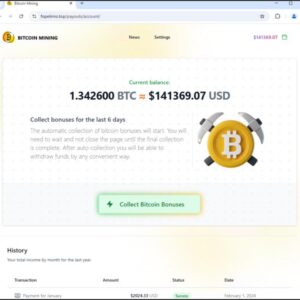
Cloud-mining scams may advertise cryptocurrency mining contracts that appear to generate regular profits.
A victim may initially see small returns or a growing balance.
Later, the platform may disappear or demand additional payments before allowing withdrawals.
The source lists cloud-mining scams among the investment scam categories handled by the service.
Crypto scam recovery can involve tracing deposits and identifying where the cryptocurrency was subsequently transferred.
Giveaway Scams
Giveaway scams commonly use promises that a person can send a small amount of cryptocurrency and receive a larger amount in return.
The source provides the example of fake celebrity-style cryptocurrency giveaways involving claims such as sending one ETH and receiving several ETH back.
A crypto scam recovery investigation can document the promotional content and trace the transaction to the receiving wallet.
Cryptocurrency Hacks
Cryptocurrency can also be lost through unauthorized access to wallets or exchange accounts.
The source includes crypto hack address recovery under its technical recovery category.
Depending on the circumstances, crypto scam recovery can involve:
- Unauthorized wallet transactions
- Compromised exchanges
- Malware
- Phishing
- Stolen credentials
- Malicious applications
- Unauthorized transfers
You can review the Crypto Hack Address Recovery service when the loss involves a compromised wallet or account.
The Crypto Scam Recovery Process
A structured crypto scam recovery investigation should begin with evidence.
The source describes a process beginning with an initial assessment, followed by a case evaluation, tracing, a potential recovery plan, and possible exchange or legal cooperation.
Step 1: Initial Assessment
The first stage is to understand:
- What happened
- What type of scam occurred
- How much cryptocurrency was lost
- When the loss occurred
- Which blockchain was involved
- Which wallet sent the funds
- Which wallet received them
This initial information helps determine whether further crypto scam recovery investigation may be appropriate.
Step 2: Case Evaluation
The source lists a $99 case evaluation involving forensic analysis and blockchain tracing. It states that a detailed report is provided within a stated 3–10 business-day period depending on complexity.
The evaluation can focus on identifying the relevant transaction pathway.
Step 3: Blockchain Tracing
Blockchain tracing involves reconstructing the movement of cryptocurrency from the victim’s wallet through subsequent destinations.
A simplified pathway might look like:
Victim Wallet → Scammer Wallet → Secondary Wallet → Exchange
A more complicated case might look like:
Victim Wallet → DEX → Wallet A → Wallet B → Bridge → Stablecoin → Exchange
Crypto scam recovery becomes more complicated when assets move through numerous wallets or blockchain networks.
Step 4: Recovery Assessment
After tracing, the available evidence can be reviewed to determine what options may exist.
The source describes contingency-based recovery work in which the stated fee is a percentage of recovered funds. However, any recovery arrangement should be reviewed carefully under the applicable contract and policies.
Step 5: Exchange and Legal Cooperation
If assets reach a centralized exchange, that exchange may become relevant to the investigation.
The source states that the service may work with exchanges, stablecoin issuers, and law enforcement where possible.
Importantly, identifying an exchange destination does not itself prove who controls the account or guarantee that the exchange will freeze or return funds.
Why Blockchain Tracing Matters
One of the central components of crypto scam recovery is blockchain analysis.
A blockchain transaction can provide information about:
- Sending address
- Receiving address
- Amount
- Asset
- Timestamp
- Transaction hash
- Contract interaction
- Subsequent transfers
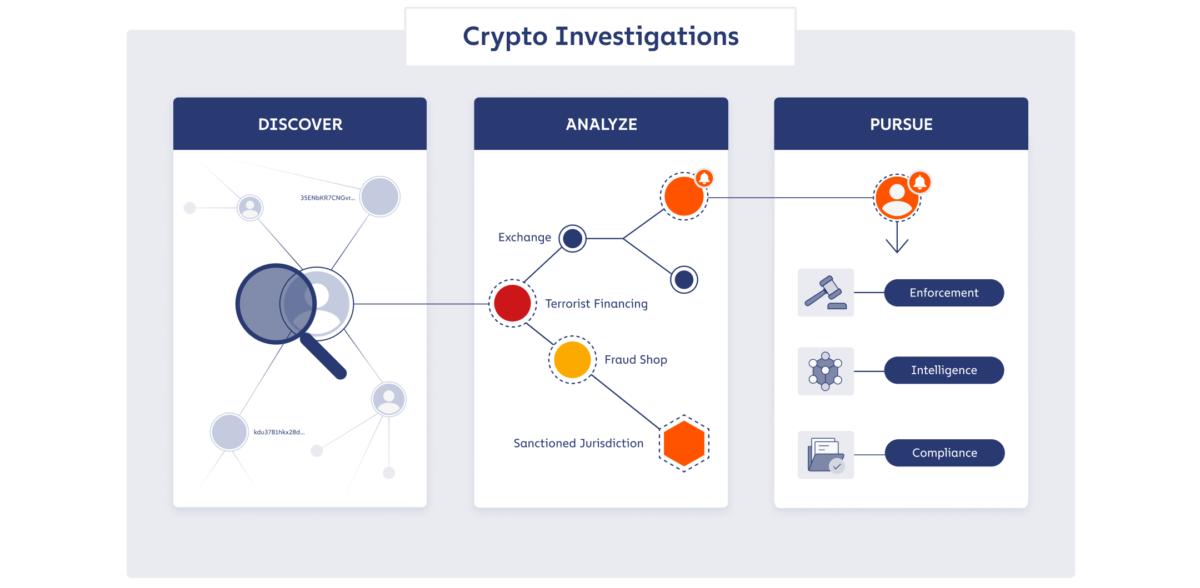
By organizing this information chronologically, an investigator can build a transaction map.
For example:
Victim Wallet
↓
Scammer Receiving Wallet
↓
Secondary Wallet
↓
Stablecoin Conversion
↓
Exchange Deposit
This type of transaction map can be useful when documenting a cryptocurrency fraud case.
Our Blockchain Forensic Investigation service can be relevant when a case requires more extensive forensic analysis.
Can Crypto Scam Recovery Guarantee Your Money Back?
No legitimate crypto scam recovery process should guarantee that every stolen asset will be recovered.
The source itself states that recovery cannot be guaranteed and notes that blockchain transactions are irreversible.
This is important because cryptocurrency recovery depends on circumstances outside the investigator’s control.
Potential factors include:
- Speed of reporting
- Whether the funds remain traceable
- Whether funds reach an identifiable exchange
- Blockchain used
- Cross-chain transfers
- Mixers or privacy tools
- Evidence quality
- Jurisdiction
- Exchange cooperation
- Whether the assets remain accessible
Therefore, crypto scam recovery should be treated as an investigative process rather than a guaranteed refund mechanism.
What Information Should You Provide?
Useful evidence for crypto scam recovery may include:
Blockchain Information
- Transaction hashes
- Wallet addresses
- Token contract addresses
- Blockchain network
- Transaction dates
- Amounts transferred
Scam Information
- Website URL
- Application name
- Telegram username
- Discord username
- WhatsApp number
- Email address
- X profile
- Scammer’s name or alias
Financial Evidence
- Exchange records
- Payment confirmations
- Bank records
- Deposit information
- Withdrawal requests
Communication Evidence
- Screenshots
- Emails
- Telegram conversations
- WhatsApp conversations
- Discord messages
- Social-media messages
The source specifically identifies transaction hashes, wallet addresses, scam website information, application names, and communications as useful information.
Never Share Your Private Key or Seed Phrase
This is one of the most important security rules in crypto scam recovery.
You should never provide your:
- Seed phrase
- Private key
- Wallet password
- Two-factor authentication codes
- Exchange password
The source explicitly states that legitimate recovery should not require private keys or seed phrases and that transaction hashes and wallet addresses can be used instead.
If someone contacts you claiming they can recover your cryptocurrency but first asks for your seed phrase, treat that as a serious warning sign.
What If the Scammer Used a Mixer?
Cryptocurrency mixers and privacy-enhancing services can make blockchain tracing more complicated.
The source states that cases involving mixers such as Tornado Cash may be more difficult while also describing the possibility of tracing funds in some circumstances.
For crypto scam recovery, the important point is that difficulty should not be confused with certainty.
A transaction path may become harder to follow, but that does not mean that every investigation is automatically impossible.
The appropriate approach is to examine the actual transaction history.
What If the Scam Happened Months or Years Ago?
An older cryptocurrency scam is not automatically irrelevant.
The source notes that some scammers may hold assets for extended periods before moving them to exchanges and that exchange records may remain available for years.
However, older cases can present additional challenges.
Evidence may have disappeared, websites may have gone offline, communication accounts may have been deleted, and funds may have moved through multiple wallets.
That is why crypto scam recovery should begin with whatever evidence remains available.
Crypto Scam Recovery and Exchange Destinations
Centralized exchanges can become important investigative points when stolen cryptocurrency eventually reaches them.
Potential platforms may include:
These are official exchange websites.
An exchange appearing in a transaction trail does not by itself establish wrongdoing by the exchange or identify the person behind a particular account.
For crypto scam recovery, an exchange destination should instead be treated as a potential investigative lead.
Related Crypto Scam Recovery Services
Different incidents may require specialized analysis.
You can explore:
- Pig Butchering Scam Recovery
- Crypto Phishing Recovery
- Fake Crypto Exchange Recovery
- Fake Crypto Investment Recovery
- Wallet Drainer Recovery
- Stolen Bitcoin Recovery
- Crypto Asset Tracing Services
- Blockchain Forensic Investigation
These services can help organize an investigation around the particular circumstances of a cryptocurrency loss.
Company-Provided Case Examples
The source page contains several case examples involving reported recoveries:
- A pig-butchering case involving 180,000 USDT and a reported 142,000 USDT recovery.
- A fake-exchange case involving 45,000 and a reported 41,000 recovery.
- A phishing case involving 12.5 BTC and a reported 680,000 recovery.
- A rug-pull example involving 450,000 in liquidity and a reported 287,000 recovery.
These figures are presented here as company-provided case examples from the supplied source, not as independently verified results.
They should not be interpreted as a promise that a future crypto scam recovery case will produce a similar outcome.
Every investigation is different.
How Long Does Crypto Scam Recovery Take?
The supplied source gives estimated timelines of approximately 2–4 weeks for simple cases and 2–3 months for complex cases involving mixers or multiple transaction hops.
These should be treated as estimates rather than guarantees.
A crypto scam recovery investigation may take longer depending on:
- Number of transactions
- Number of wallets
- Number of blockchains
- Cross-chain activity
- Exchange involvement
- Mixer use
- Evidence availability
- Legal or compliance requirements
What If My Scam Is Not Listed?
Not every cryptocurrency scam fits neatly into one category.
You may have encountered:
- A fake NFT project
- A malicious smart contract
- A fake mining platform
- A fake celebrity promotion
- A social-media impersonation
- A wallet-draining website
- A fake customer-support representative
- A compromised exchange account
- A fraudulent token presale
If your situation is not listed, the source recommends contacting the service for an initial assessment.
You can also use the Contact Us page to provide information about your situation.
Protect Yourself After a Crypto Scam
After an incident, securing remaining accounts and assets is important.
Consider:
- Stop communicating with the scammer.
- Do not send additional cryptocurrency.
- Preserve all evidence.
- Record transaction hashes.
- Secure your email account.
- Change compromised passwords.
- Enable appropriate two-factor authentication.
- Review wallet permissions where applicable.
- Contact legitimate platforms through their official websites.
- Report the incident to appropriate authorities.
These actions can help prevent additional losses while a crypto scam recovery investigation is being considered.
Important Warning About Recovery Scams
Victims can sometimes be targeted by a second scam after their original cryptocurrency loss.
A fake recovery agent may claim:
- “We found your funds.”
- “Your money is frozen.”
- “Pay a tax to unlock it.”
- “Send cryptocurrency for verification.”
- “Give us your seed phrase.”
- “Pay an upfront recovery percentage.”
Such requests deserve careful scrutiny.
A responsible crypto scam recovery provider should clearly explain what is known, what remains uncertain, what evidence supports the investigation, and what the contractual terms are.
You should never surrender control of your cryptocurrency wallet to someone claiming to recover your funds.
Start Your Crypto Scam Recovery Case
If you have lost cryptocurrency to a scam, the first step is to document what happened.
Record:
- The amount lost
- The cryptocurrency involved
- Your wallet address
- The destination wallet
- Transaction hashes
- The scammer’s communication details
- Website or application information
- Screenshots
- Exchange information
- Approximate date of the incident
Then consider whether professional crypto scam recovery investigation is appropriate.
You can begin through the Case Evaluation page or Case Consultation.
You can also review the company’s Success Stories, FAQ, Privacy Policy, Terms & Conditions, Refund Policy, Disclaimer, and AML Compliance Policy.
The objective of crypto scam recovery is to investigate the available evidence, trace relevant cryptocurrency movements, document the transaction history, and identify possible next steps.
Frequently Asked Questions About Crypto Scam Recovery
What is crypto scam recovery?
Crypto scam recovery is the investigation of cryptocurrency losses caused by fraudulent activity. It can involve blockchain tracing, wallet analysis, transaction reconstruction, evidence collection, and assessment of possible recovery avenues.
Can crypto scam recovery guarantee that my money will be returned?
No. Crypto scam recovery cannot guarantee that cryptocurrency will be recovered.
The supplied source also states that no legitimate recovery service can guarantee recovery.
How much is the case evaluation?
The supplied source lists a $99 case evaluation.
What information should I provide?
Transaction hashes, wallet addresses, scam websites, application names, screenshots, and communications can be useful.
Do you need my private key?
No. Never provide your private key or seed phrase.
Can old cryptocurrency scams still be investigated?
Potentially. The source notes that some scammers may hold funds for long periods before moving them.
Can funds be traced through multiple wallets?
Potentially, depending on the blockchain data and transaction structure. Multiple wallet hops can make crypto scam recovery more complicated.
What if cryptocurrency reached an exchange?
An exchange destination may provide an important investigative lead, but it does not automatically establish the identity of the account holder or guarantee recovery.
What if a mixer was used?
Mixer activity can make crypto scam recovery more difficult. The source states that such cases may still be investigated in some circumstances.
What cryptocurrency can be investigated?
The source identifies BTC, ETH, USDT on ERC-20 and TRC-20, USDC, BNB, SOL, XRP, DOGE, and other cryptocurrencies.
What if my scam is not listed?
Contact the service for an assessment. The source states that other scam types may also be handled.
Final Crypto Scam Recovery Resource Section
If you are dealing with cryptocurrency fraud, the most important first step is preserving evidence.
Do not delete conversations.
Do not send additional money to the scammer.
Do not give anyone your private key or seed phrase.
Do not assume that a person who contacts you claiming to be a recovery agent is legitimate.
Instead, document the blockchain transactions and gather the information surrounding the incident.
Crypto scam recovery may involve tracing stolen Bitcoin, USDT, Ethereum, stablecoins, BNB, Solana, XRP, or other digital assets across one or multiple blockchain networks.
You can explore the Crypto Reverse Transaction homepage, Services, About Us, Case Evaluation, and Contact Us to learn more.
The central principle remains simple:
Tracing is not the same as recovery.
A blockchain investigation may identify where cryptocurrency moved without guaranteeing that the assets can be returned.
A responsible crypto scam recovery process therefore focuses on evidence, transaction analysis, transparency, and realistic expectations.
Recovery Disclaimer
Crypto scam recovery does not guarantee the recovery of cryptocurrency or fiat currency. Blockchain transactions may be irreversible, and tracing a wallet does not automatically establish the real-world identity of its owner or guarantee that an exchange, stablecoin issuer, law-enforcement agency, or other organization will return funds.
The case examples and recovery figures contained in the supplied source are presented as company-provided examples and have not been independently verified here.
Every case is different. Outcomes may depend on the blockchain involved, speed of reporting, movement of funds, evidence available, exchange involvement, jurisdiction, privacy tools, and other circumstances.
Never provide your seed phrase, private key, wallet password, or authentication credentials to a recovery provider.

Reviews
There are no reviews yet.