
Description
Stolen Bitcoin Recovery – Professional BTC Tracing & Recovery Investigation
Losing Bitcoin to a scammer can be devastating. Whether your BTC was sent to a fake investment platform, stolen through phishing, taken after a wallet compromise, or transferred because of an impersonation scam, the first question is usually the same:
Where did my Bitcoin go?
Stolen Bitcoin recovery begins by answering that question through transaction analysis and blockchain tracing.
Bitcoin transactions are recorded on a public blockchain. Once a transaction has been confirmed, it generally cannot simply be reversed. However, the transaction history can provide information about where BTC moved after leaving the victim’s wallet.
Our stolen Bitcoin recovery service focuses on analyzing the available blockchain evidence, tracing relevant transactions, identifying potential destination addresses, and organizing information that may support further action.
If you have lost BTC, you can begin with a professional case assessment through Crypto Reverse Transaction or submit information through the Case Evaluation page.
What Is Stolen Bitcoin Recovery?
Stolen Bitcoin recovery is the process of investigating the movement of Bitcoin after it has been taken through theft, fraud, hacking, phishing, or another cryptocurrency scam.
The process can involve:
- Identifying the original transaction
- Reviewing the Bitcoin transaction history
- Mapping receiving addresses
- Following subsequent BTC transfers
- Identifying clusters of related transactions
- Reviewing potential exchange destinations
- Organizing Telegram, email, website, or other scam evidence
- Preparing a structured transaction timeline
- Identifying possible next steps
The goal is not to claim that every stolen Bitcoin transaction can be reversed.
Instead, stolen Bitcoin recovery uses available evidence to determine what happened to the cryptocurrency and whether there are identifiable avenues for further action.
The original product page correctly highlights an important limitation: Bitcoin transactions cannot simply be reversed after confirmation.
How Does Stolen Bitcoin Recovery Work?
Bitcoin operates on a transparent public ledger.
When BTC moves from one address to another, the transaction creates a record that can generally be inspected using blockchain data.
This makes Bitcoin different from some traditional payment systems where transaction information may be available only to financial institutions.
However, transparency does not mean that every wallet can automatically be linked to a person’s real-world identity.
A stolen Bitcoin recovery investigation therefore separates three different questions:
1. Where did the BTC go?
Blockchain analysis can help establish the movement of the cryptocurrency.
2. Where did it go next?
Subsequent transactions can be followed to identify additional addresses.
3. Who controls the destination?
This may be much more difficult to establish and can require information from exchanges, service providers, investigators, or appropriate legal authorities.
Understanding this distinction helps prevent unrealistic expectations about stolen Bitcoin recovery.
Common Ways Bitcoin Is Stolen
1. Fake Bitcoin Exchanges
Fake cryptocurrency exchanges can look professional while displaying fabricated balances, trading activity, profits, and withdrawal options.
A victim may deposit BTC and see the balance appear on the website.
When the victim attempts to withdraw, the fake platform may demand additional payments for:
- Taxes
- Verification
- Withdrawal fees
- Account activation
- Security deposits
- Compliance charges
The victim may continue sending money because the website appears to show a valuable account balance.
Eventually, the platform may stop responding.
If Bitcoin was transferred to an identifiable blockchain address, stolen Bitcoin recovery can begin by establishing the transaction trail.
For cases involving fraudulent cryptocurrency platforms, the Fake Crypto Exchange Recovery service may also be relevant.
2. Pig Butchering Bitcoin Scams
Pig-butchering scams commonly combine social engineering with fraudulent investment platforms.
A scammer may build a relationship with the victim before introducing cryptocurrency investing.
The victim may then be encouraged to purchase Bitcoin and transfer it to a platform supposedly controlled by a legitimate investment company.
The fake platform may display profits that do not actually exist.
When the victim attempts to withdraw, another payment is demanded.
If BTC was transferred to a scam-controlled address, stolen Bitcoin recovery can focus on reconstructing the movement of those transactions.
3. Bitcoin Phishing Attacks
Phishing attacks attempt to trick victims into providing information or interacting with fraudulent websites.
A phishing website may imitate:
- A cryptocurrency wallet
- An exchange
- A Bitcoin service
- A hardware-wallet provider
- A cryptocurrency investment platform
The source page specifically identifies phishing involving the exposure of seed phrases or private keys as one way Bitcoin can be stolen.
If a wallet has already been compromised, do not provide the compromised credentials to anyone claiming to offer stolen Bitcoin recovery.
4. Hacked Wallets
A software wallet, computer, phone, or cryptocurrency account may become compromised.
Once unauthorized access occurs, BTC may be transferred to another wallet controlled by the attacker.
The critical information for stolen Bitcoin recovery may include:
- The original wallet address
- The unauthorized transaction
- Transaction ID
- Destination address
- Date and time
- Device or account information
- Evidence of unauthorized access
The sooner the transaction information is preserved, the easier it may be to reconstruct the sequence of events.
5. Fake Bitcoin Investment Platforms
Fraudulent investment websites can promise guaranteed profits.
A victim may initially be shown a small profit to encourage a larger deposit.
Eventually, withdrawals may be blocked.
The original product page lists fake investment platforms among the common methods of Bitcoin theft.
A stolen Bitcoin recovery investigation should examine both the cryptocurrency transaction and the fraudulent platform evidence.
Save screenshots of the dashboard before the website disappears.
6. Bitcoin Giveaway Scams
A giveaway scam may promise that sending a certain amount of Bitcoin will result in a larger return.
For example, a fraudulent promotion may claim:
“Send 1 BTC and receive 5 BTC back.”
These schemes are a common warning sign.
If Bitcoin has already been transferred, the transaction hash can provide a starting point for stolen Bitcoin recovery.
7. Ransomware Bitcoin Theft
Ransomware attacks can lock access to files or systems and demand Bitcoin.
The original page identifies ransomware as another Bitcoin theft scenario.
Ransomware cases can involve both cybersecurity evidence and blockchain evidence.
A victim should preserve:
- Ransom note
- Bitcoin address
- Transaction hash
- Emails
- Screenshots
- Malware information
- System records
- Payment information
The blockchain component can then be incorporated into a broader forensic investigation.
Bitcoin Tracing and Stolen Bitcoin Recovery
One of the most important parts of stolen Bitcoin recovery is understanding the difference between Bitcoin tracing and actual recovery.
Bitcoin tracing
Tracing determines how cryptocurrency moved.
Bitcoin recovery
Recovery involves obtaining or returning cryptocurrency through a legitimate mechanism.
A blockchain analyst can potentially trace a transaction without having any ability to take control of the destination wallet.
This distinction matters.
If a scammer’s wallet is identified, that does not mean the investigator can simply access it.
Likewise, identifying an exchange deposit address does not automatically mean the account will be frozen or that funds will be returned.
The original source states that Bitcoin can be traced through its blockchain transaction history.
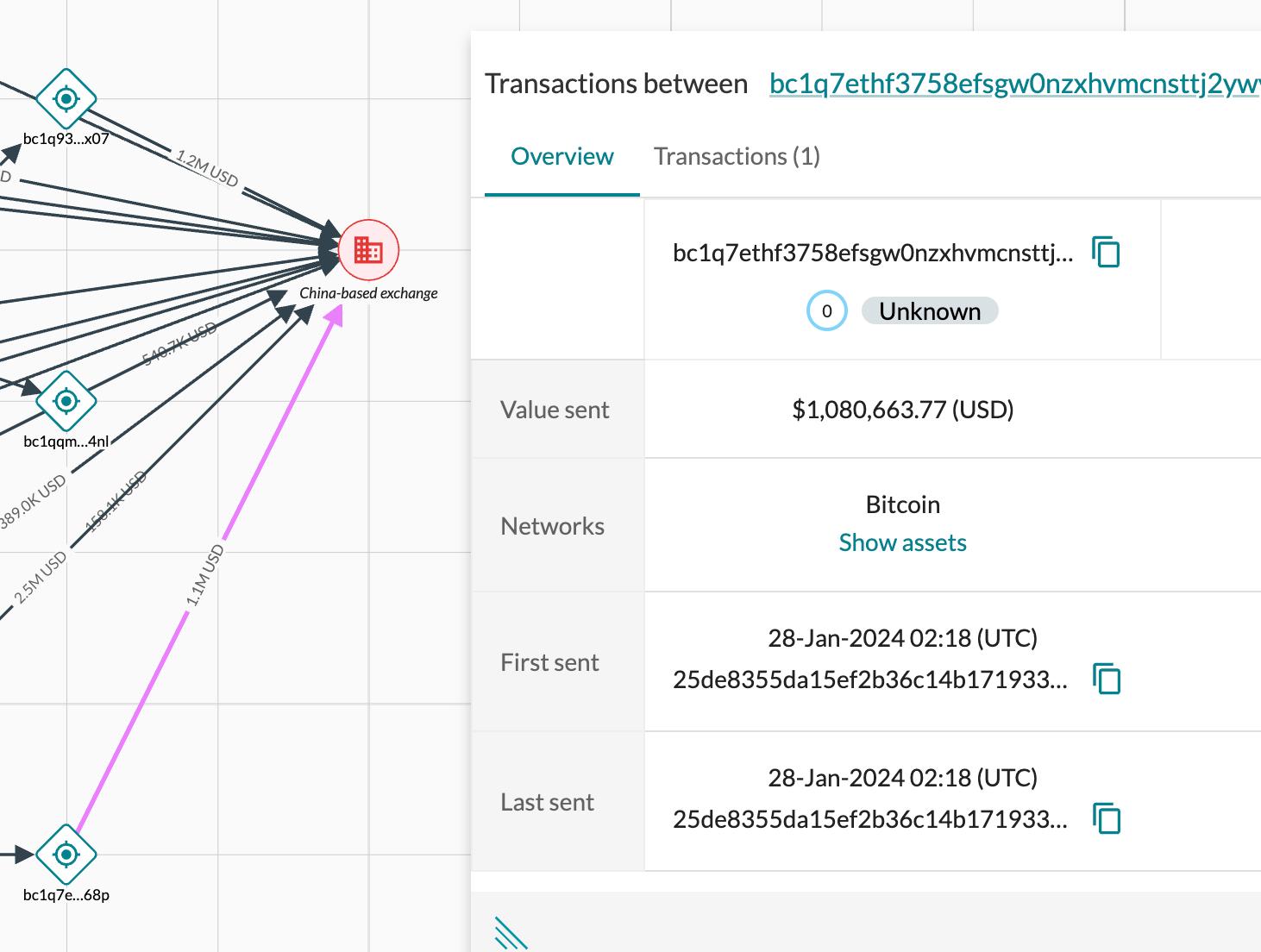
What Happens When Stolen Bitcoin Reaches an Exchange?
An exchange destination can become an important investigative lead.
If blockchain analysis indicates that stolen BTC reached an exchange-controlled address, the victim may be able to provide the transaction evidence to the exchange’s appropriate fraud or compliance channel.
However, stolen Bitcoin recovery should never promise that an exchange will freeze an account.
The exchange makes its own determination based on its procedures, evidence, account information, and applicable legal requirements.
Official exchange websites should always be accessed directly rather than through links supplied by scammers.
Useful official resources include:
Additional exchanges that may be relevant when researching transaction destinations include:
The objective of stolen Bitcoin recovery at this stage is to document the transaction accurately and identify the appropriate next step.
Can Stolen Bitcoin Be Recovered?
Recovery may be possible in some circumstances, but it cannot be guaranteed.
Several factors can affect a stolen Bitcoin recovery case.
These include:
- How quickly the theft was discovered
- Whether the BTC is still moving
- Whether the funds remain in a traceable wallet
- Whether the BTC reaches a centralized exchange
- Whether sufficient evidence exists
- Whether an exchange can associate an address with an account
- Whether the funds have passed through additional services
- Whether legal intervention is appropriate
A successful blockchain trace does not automatically mean that the Bitcoin will be returned.
That is why professional stolen Bitcoin recovery should begin with a realistic case assessment.
What We Cannot Do
Responsible stolen Bitcoin recovery requires clear boundaries.
We cannot:
- Hack a scammer’s wallet
- Guess a private key
- Break into an exchange account
- Reverse a confirmed Bitcoin transaction
- Guarantee that an exchange will freeze funds
- Guarantee that stolen Bitcoin will be returned
- Ask victims to surrender private keys
- Ask victims to provide seed phrases
The original page also states that the service cannot reverse Bitcoin transactions or hack into scammer wallets.
This distinction is important because scammers sometimes impersonate recovery specialists and demand access to victims’ wallets.
Never Give Your Seed Phrase or Private Key
This is one of the most important rules for anyone seeking stolen Bitcoin recovery.
Your recovery phrase and private key can provide control over your cryptocurrency.
Never send them to:
- A recovery company
- A Telegram administrator
- A WhatsApp contact
- A supposed exchange employee
- A person claiming to be a blockchain investigator
- An online “hacker”
- A customer-support account
A legitimate transaction investigation can begin with public blockchain information such as transaction hashes and wallet addresses.
The source page specifically states that victims should not share private keys and that transaction hashes and wallet addresses are sufficient for its stated investigation process.
Our Stolen Bitcoin Recovery Process
Step 1: Initial Case Assessment
The first step is to explain what happened.
Useful information includes:
- How the Bitcoin was stolen
- Amount of BTC
- Approximate date
- Sending wallet
- Receiving wallet
- Transaction hash
- Name of the platform involved
- Screenshots
- Emails or messages
The supplied page describes a free initial assessment as the first step.
Step 2: $99 Case Evaluation
The supplied product page lists a $99 case evaluation.
During the evaluation, the available transaction information can be reviewed to determine whether the BTC movement can be meaningfully analyzed.
The source describes the evaluation as including blockchain tracing and identification of potential exchange deposits.
You can start through the Stolen Bitcoin Recovery case evaluation.
Step 3: Blockchain Transaction Analysis
The relevant Bitcoin transactions can be reviewed and organized.
This may include:
- Input addresses
- Output addresses
- Transaction IDs
- Amounts
- Block information
- Transaction timing
- Subsequent transfers
- Related wallet activity
The purpose is to establish an evidence-based transaction timeline.
Step 4: Fund-Flow Mapping
If the BTC moves through multiple addresses, the transactions can be mapped chronologically.
For example:
Victim wallet → Scammer wallet → Secondary wallet → Exchange-associated address
This does not prove who controls every address.
It does, however, provide a documented representation of the cryptocurrency movement.
For more advanced analysis, you can also review the Blockchain Forensic Investigation service.
Step 5: Potential Exchange Destination
If the transaction trail reaches a potential exchange destination, the evidence can be organized for appropriate reporting.
Relevant official exchange resources include:
The presence of an exchange-associated address should be described as an investigative lead rather than proof that an identifiable individual has been established.
Stolen Bitcoin Recovery Case Study
The source product page contains a company-supplied case example involving 8.5 BTC, a fake investment platform, two intermediary wallets, a Binance deposit address, and a reported recovery.
Because those figures are supplied as a business case study and are not independently verified by the source material available here, they should be presented as a reported case example, not as a guaranteed outcome for future customers.
The example illustrates the type of transaction sequence that a stolen Bitcoin recovery investigation may attempt to reconstruct:
Victim → Fake investment platform → Intermediate wallets → Potential exchange destination
The important investigative component is establishing the actual blockchain trail and preserving the evidence.
How Fast Should You Act After Bitcoin Theft?
Speed can matter because cryptocurrency may move rapidly between addresses.
If you discover that your Bitcoin has been stolen:
- Stop sending additional funds.
- Preserve the transaction hash.
- Save wallet addresses.
- Screenshot the scam website.
- Save Telegram or WhatsApp messages.
- Record the scammer’s usernames.
- Secure any unaffected wallets.
- Report the incident through appropriate channels.
- Begin a professional assessment if needed.
Do not send more cryptocurrency because a scammer claims that an additional payment will unlock your original funds.
Likewise, be cautious of a second person who promises guaranteed stolen Bitcoin recovery for an upfront payment.
Bitcoin Recovery After a Fake Investment Scam
Fake investment scams often create a second stage of fraud after the original Bitcoin deposit.
The victim may be told:
“Your account has generated $200,000.”
But when the victim requests a withdrawal, the platform may demand another payment.
This can lead to repeated losses.
If this happens, preserve every payment and communication.
A stolen Bitcoin recovery investigation should consider the entire financial timeline rather than analyzing only the first Bitcoin transaction.
For broader cryptocurrency investment fraud, see Crypto Scam Recovery.
Bitcoin Recovery After a Phishing Attack
If BTC was stolen following a phishing incident, preserve the original phishing website or URL if possible.
Also record:
- Date of interaction
- Wallet used
- Transaction hash
- Destination address
- Emails
- Screenshots
- Browser information
- Security notifications
If your wallet remains compromised, do not continue using it for new funds.
A stolen Bitcoin recovery investigation can focus on the unauthorized transaction and the subsequent movement of the BTC.
Bitcoin Recovery After a Wallet Hack
When a wallet has been compromised, the investigation should distinguish between:
Unauthorized wallet access
and
Blockchain movement after the theft.
The first may require cybersecurity analysis.
The second can involve blockchain tracing.
A complete stolen Bitcoin recovery case may require both types of evidence.
If your wallet contains remaining funds, prioritize securing those assets through a trusted and independently verified wallet-security process.
Bitcoin Recovery and Mixing Services
Bitcoin that moves through mixing or CoinJoin-style transactions can become more difficult to analyze.
The original page states that recovery is very unlikely when BTC has been mixed through services such as Wasabi Wallet or CoinJoin.
Rather than treating this as an absolute impossibility, a professional stolen Bitcoin recovery assessment should examine the specific transaction history and determine what information remains available.
Complex transaction structures may reduce confidence in identifying a direct destination.
What If the Scammer Has Not Moved the Bitcoin?
If stolen Bitcoin remains in a wallet controlled by the attacker, there may be no automatic mechanism to take it back.
The original source states that its process cannot recover BTC simply because it remains in the scammer’s wallet and mentions monitoring wallet activity.
Any monitoring or follow-up service should be clearly defined in the applicable service agreement.
The key point is that identifying an address is not the same as gaining control of it.
How to Prevent Future Bitcoin Theft
The source recommends using a hardware wallet for large amounts, never sharing a seed phrase, verifying website URLs, and using a small test transaction before sending a larger amount.
Additional good practices include:
Use a hardware wallet for significant holdings
Keep long-term cryptocurrency in a properly secured wallet.
Never share your seed phrase
No legitimate support representative should need it.
Verify website addresses
Do not log into exchanges through links sent by strangers.
Test large transfers
When appropriate, consider a small test transaction before sending a significant amount.
Be skeptical of guaranteed returns
Guaranteed cryptocurrency profits are a major warning sign.
Verify investment platforms independently
Do not rely solely on Telegram groups or private messages.
These steps can reduce the likelihood that you will need stolen Bitcoin recovery services in the future.
Why Choose Crypto Reverse Transaction?
The supplied product page identifies several reasons customers may choose the service:
- Legal contract before work
- No recovery, no fee
- Bitcoin blockchain tracing specialists
- Claimed exchange relationships
- Structured recovery process
These are business claims supplied in the original product material and should be understood according to the company’s current terms and service agreement.
For additional company information, visit About Us.
You can also review the Privacy Policy and AML Compliance Policy.
Frequently Asked Questions About Stolen Bitcoin Recovery
How long does stolen Bitcoin recovery take?
The source page gives an estimate of 2–6 weeks when BTC reaches an exchange and 1–3 months for complex cases.
Actual timing can vary depending on transaction complexity, evidence, number of addresses, exchange involvement, and any required third-party or legal process.
What information do I need?
The source requests the Bitcoin transaction hash, sending address, receiving address, and approximate date of the theft.
Additional screenshots and scam communications can also help establish the circumstances.
Is the $99 fee refundable?
The supplied page states that the $99 evaluation is refundable if the case is determined to be unrecoverable.
Review the current Refund Policy for the applicable conditions.
Can you recover Bitcoin sent to a mixer?
The source describes recovery after mixing as very unlikely.
The actual traceability of a particular transaction depends on its individual transaction history and available evidence.
What if the scammer still has my Bitcoin?
If the BTC remains in an address controlled by the scammer, a recovery service cannot simply take control of that wallet.
The address can potentially be documented and relevant activity monitored where such monitoring is part of the agreed service.
Can you recover Bitcoin from a fake exchange?
A fake exchange can be investigated by analyzing the blockchain transactions associated with the deposits.
However, recovering funds depends on what happened to the Bitcoin after the transfer and whether identifiable recovery avenues remain.
Can Bitcoin transactions be reversed?
A confirmed Bitcoin transaction generally cannot simply be reversed.
Stolen Bitcoin recovery instead focuses on tracing the movement of the cryptocurrency and identifying legitimate options.
Can you identify the Bitcoin scammer?
A blockchain address does not automatically reveal a person’s identity.
If funds reach a regulated or centralized service, additional account information may potentially exist, but obtaining private account information may require cooperation from the service or appropriate legal process.
Do I need to give you my private key?
No. Never give your private key or seed phrase to a recovery service.
The supplied page specifically states that it only requires transaction hashes and wallet addresses for its stated process.
Can stolen Bitcoin be recovered from an exchange?
An exchange destination may provide an investigative lead, but recovery is not automatic.
The exchange controls its own account-review and compliance processes.
What should I do immediately after Bitcoin theft?
Stop sending additional funds, preserve the transaction evidence, save all communications, secure unaffected assets, and document the scam.
Then consider an appropriate professional assessment.
Related Bitcoin & Crypto Recovery Services
Cloud Mining Scam Recovery
If your Bitcoin was stolen through a fake mining contract or fraudulent cloud-mining platform, see Cloud Mining Scam Recovery.
Crypto Scam Recovery
For investment scams, fake exchanges, phishing, pig-butchering schemes, and other cryptocurrency fraud, see Crypto Scam Recovery.
Blockchain Forensic Investigation
For a broader transaction investigation and evidence analysis, see Blockchain Forensic Investigation.
Crypto Asset Tracing
For cases where the primary need is transaction tracing, see Crypto Asset Tracing Services.
Start Your Stolen Bitcoin Recovery Case
If your Bitcoin was stolen, do not panic and do not send additional cryptocurrency to the scammer.
Preserve the evidence.
Keep your:
- Bitcoin transaction ID
- Sending address
- Receiving address
- Wallet records
- Screenshots
- Emails
- Telegram conversations
- Investment-platform information
- Payment records
Then begin a professional assessment.
Start through the Stolen Bitcoin Recovery case evaluation or contact Crypto Reverse Transaction.
Stolen Bitcoin recovery starts with accurate evidence and blockchain tracing. While no responsible service can guarantee that stolen BTC will be returned, a structured investigation can help establish where the cryptocurrency moved and what legitimate options may be available.



Reviews
There are no reviews yet.