

Description
What Is Fake Support Impersonation?
Fake support impersonation recovery begins with understanding how the scam happened and documenting the evidence before attempting to trace the stolen assets.
Fake support impersonation occurs when someone pretends to be a legitimate customer-support representative, administrator, moderator, exchange employee, wallet provider, or technical-support agent. The scammer may contact a victim through Discord, Telegram, Twitter/X, Reddit, email, a messaging application, or a fraudulent support website.
The source material for this service specifically describes impersonators pretending to represent platforms and services such as MetaMask, Ledger, Trezor, Binance, Coinbase, Kraken, and OpenSea.
The objective is usually to make the victim trust the impersonator.
The scammer may claim that an account is locked, a transaction is pending, a wallet needs verification, an NFT is missing, a withdrawal has failed, or suspicious activity has been detected.
The victim is then instructed to take an action that gives the scammer access to information, credentials, or cryptocurrency.
Common requests include:
- Seed phrases
- Private keys
- Passwords
- Two-factor authentication codes
- Wallet connections
- Login credentials
- Verification payments
- Cryptocurrency sent to a supposed security address
- Installation of suspicious software
- Clicking on fraudulent support links
A professional fake support impersonation recovery investigation focuses on documenting the incident, identifying the relevant blockchain transactions, mapping wallet movements, and determining what investigative leads may exist.
How Fake Support Impersonation Scams Work
A typical fake support scam can develop very quickly.
For example, a victim might post publicly that they are having difficulty with a crypto wallet. A scammer sees the post and sends a private message pretending to be support.
The scammer may have a username, profile picture, logo, or writing style designed to resemble the legitimate organization.
The conversation then moves away from the legitimate support channel.
The scammer might say:
“We need to verify your wallet.”
They may provide a fake website and instruct the victim to enter a seed phrase.
Alternatively, the scammer may ask the victim to provide a two-factor authentication code, password, or other account information.
The source specifically identifies Discord, Telegram, Twitter/X, email, fake support websites, and Reddit as potential channels for support impersonation.
When cryptocurrency is stolen, fake support impersonation recovery can involve both blockchain analysis and examination of the communication evidence surrounding the theft.
Common Fake Support Impersonation Scenarios
1. Discord Support Impersonation
Discord is frequently used by cryptocurrency communities, NFT projects, gaming communities, and decentralized finance projects.
A victim may ask a question in a legitimate community server.
A scammer then sends a direct message claiming to be an administrator or support employee.
The scammer may provide a fake verification link or instruct the victim to connect their wallet.
If cryptocurrency is subsequently stolen, fake support impersonation recovery can begin by preserving the Discord conversation and identifying the blockchain transaction associated with the loss.
Useful evidence can include:
- Discord username
- User ID where available
- Screenshots
- Server name
- Message timestamps
- Links sent by the impersonator
- Wallet addresses
- Transaction hashes
Do not delete the conversation before preserving evidence.
You can also review our Crypto Scam Recovery service if the incident involves broader cryptocurrency fraud.
2. Telegram Support Impersonation
Telegram is another common communication channel for cryptocurrency communities.
A fake administrator may contact a user privately and claim that they can resolve a wallet, exchange, or transaction problem.
The impersonator may provide a fake support ticket or verification website.
A victim may be asked to enter credentials, approve a transaction, or provide a seed phrase.
If cryptocurrency was transferred after such an interaction, fake support impersonation recovery focuses on establishing the sequence of events and connecting the communication evidence with blockchain transactions.
Save screenshots before blocking the scammer.
Do not continue communicating with the scammer simply to obtain more information.
If the incident involved a broader Telegram investment or trading scam, our Fake Investment Scam Recovery service may also be relevant.
3. Twitter/X Support Impersonation
A victim may publicly mention a problem involving an exchange or wallet.
An impersonator then responds using an account designed to look official.
The account may contain a similar username, logo, or branding.
The scammer may instruct the victim to send a direct message.
The conversation may then move to a fraudulent website or request sensitive information.
A fake support impersonation recovery investigation can use the original public post, impersonator account information, direct messages, screenshots, transaction hashes, and wallet addresses as part of the evidence package.
Always verify support through the organization’s official website rather than trusting an unsolicited message.
Fake Support Emails and Phishing Websites
Support impersonation does not have to happen through social media.
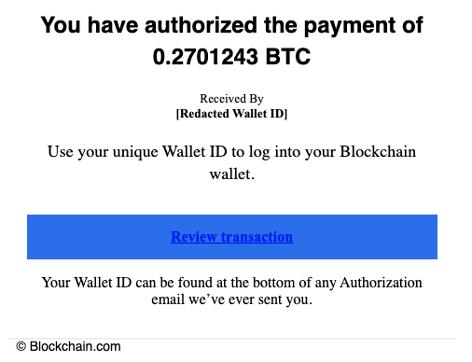
A scammer may send an email that appears to come from a cryptocurrency exchange, wallet provider, NFT marketplace, or financial service.
The email may claim:
- Your account has been locked.
- Your withdrawal is pending.
- Suspicious activity has been detected.
- You must verify your identity.
- Your wallet requires security verification.
- Your account will be suspended.
A link may lead to a fraudulent login page.
The page can be designed to imitate a legitimate website and collect passwords, authentication codes, or other sensitive information.
If cryptocurrency is subsequently stolen, fake support impersonation recovery may require analyzing both the phishing incident and the blockchain transactions that followed.
Preserve the original email if possible.
Do not rely only on a screenshot. Keep the original message, sender information, URLs, timestamps, and transaction records where available.
Fake Support Phone Numbers
Another form of impersonation involves fraudulent customer-support phone numbers.
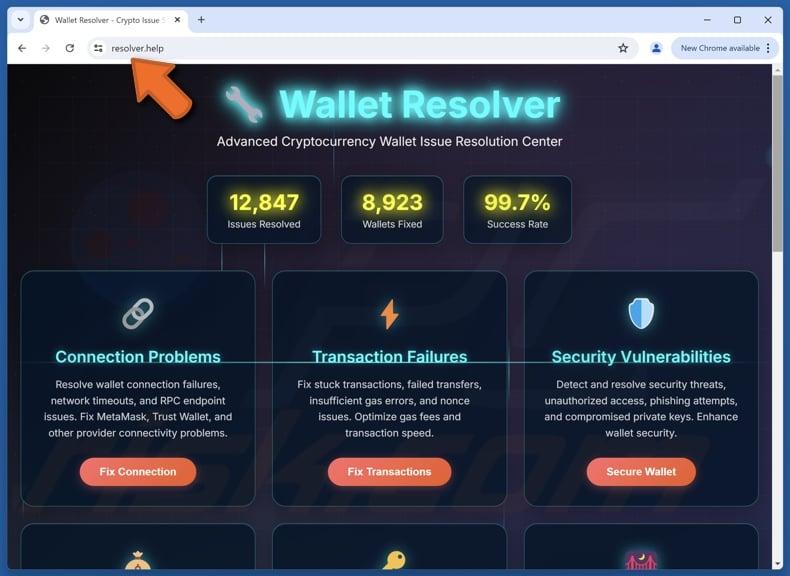
A victim may search online for customer support and encounter a fraudulent website or advertisement containing a phone number.
The person answering the call claims to be support.
The scammer may then request a seed phrase, remote-access software, verification payment, or account credentials.
The source specifically includes fake support phone numbers among the scenarios covered by this service.
If cryptocurrency was lost during a fraudulent support call, preserve:
- The phone number
- Call records
- Screenshots
- Website URL
- Emails
- Payment records
- Wallet addresses
- Transaction hashes
- Any software installed at the scammer’s request
This information can help establish the timeline for fake support impersonation recovery.
The Most Important Warning: Real Support Does Not Need Your Seed Phrase
One of the most important elements of fake support impersonation recovery is recognizing what legitimate support should not request.
The source states that legitimate support should not ask users for seed phrases, private keys, 2FA codes, cryptocurrency sent to a verification address, or wallet connections through an unsolicited support website.
Never give your seed phrase to someone claiming to be support.
Never give your private key to a supposed support agent.
Never send cryptocurrency to an address simply because someone claims it is required for verification.
And never assume that an account is legitimate because it uses a familiar company logo.
When in doubt, independently navigate to the organization’s official website and use its published support channel.
For example, users should access official exchange websites directly rather than clicking support links supplied by strangers.
What To Do Immediately After a Fake Support Scam
Time can matter when responding to a cryptocurrency theft.
If you believe your wallet or exchange account has been compromised, consider these immediate steps.
1. Stop communicating with the impersonator
Do not continue following instructions from the suspected scammer.
2. Do not send additional cryptocurrency
Scammers may claim that another payment is necessary to unlock or recover your funds.
Do not send additional money merely because the scammer demands it.
3. Secure unaffected accounts
If your exchange account, email account, or other online accounts may have been compromised, use the legitimate provider’s official security procedures.
4. Preserve evidence
Save screenshots, messages, usernames, URLs, transaction hashes, wallet addresses, emails, and timestamps.
5. Protect remaining funds
If a wallet’s seed phrase or private key was exposed, treat that wallet as compromised. The safest response may involve moving remaining assets to a newly created secure wallet, but users should take care to avoid transferring funds to another fraudulent address.
6. Identify the blockchain transactions
Record the transaction hash, sending address, receiving address, token, amount, and approximate time.
These details are central to fake support impersonation recovery investigations.
Our Crypto Hack Address Recovery service can also be relevant when unauthorized transactions resulted from a compromised wallet.
How Our Fake Support Impersonation Recovery Process Works
Step 1: Initial Case Assessment
The first stage of fake support impersonation recovery is understanding what happened.
We review information such as:
- How the scammer contacted you
- Which platform was used
- What information was disclosed
- Whether a wallet was connected
- Whether credentials were compromised
- Which assets were lost
- Where the transaction began
- Whether there are known transaction hashes
The source describes an initial assessment intended to determine the circumstances of the case.
Step 2: $99 Case Evaluation
The supplied product page lists a $99 case evaluation.
The evaluation is intended to organize the available evidence and begin the blockchain investigation.
The source describes a forensic analyst tracing stolen assets on the blockchain and identifying potential destinations.
However, blockchain tracing should not be confused with guaranteed recovery.
A transaction may be traceable while the underlying assets remain difficult or impossible to recover.
Step 3: Blockchain Transaction Analysis
The investigator reviews the relevant blockchain activity.
Depending on the case, analysis may include:
- Origin wallet
- Destination wallet
- Transaction hashes
- Token transfers
- Wallet-to-wallet movements
- Exchange deposit addresses
- Multiple transaction hops
- Cross-chain transfers
- Contract interactions
- Timing relationships
The purpose is to establish a defensible transaction history.
This information may help identify potential investigative leads.
Step 4: Exchange Destination Analysis
If stolen cryptocurrency eventually reaches an identifiable exchange or service, that destination can become an important investigative lead.
For example, a transaction may move through several addresses before reaching a deposit address associated with an exchange.
This does not automatically establish the identity of the person controlling the funds.
It also does not guarantee that an exchange will freeze an account or return assets.
The investigation may instead provide information that can potentially support communication with the relevant platform or authorities.
You can review our Crypto Asset Tracing Services for broader asset-tracing work.
What Evidence Should You Provide?
For effective fake support impersonation recovery, the quality of the available evidence matters.
Useful information may include:
Communication Evidence
- Discord messages
- Telegram messages
- Twitter/X conversations
- Reddit messages
- Emails
- Screenshots
- Usernames
- Profile URLs
- Phone numbers
Blockchain Evidence
- Transaction hashes
- Wallet addresses
- Blockchain/network used
- Token type
- Amount transferred
- Date and approximate time
Website Evidence
- Fake support URL
- Screenshots
- Domain name
- Emails containing the link
- Copies of fraudulent forms
Account Evidence
- Exchange involved
- Approximate time of compromise
- Unauthorized withdrawals
- Security alerts
Never send your seed phrase or private key as evidence.
The source explicitly states that only transaction hashes and wallet addresses are needed for the investigation and that private keys and seed phrases should not be shared.
Can Fake Support Impersonation Recovery Actually Recover Stolen Crypto?
This is an important distinction.
Fake support impersonation recovery can investigate and trace cryptocurrency transactions, but tracing does not mean that the cryptocurrency will automatically be returned.
Several factors can affect the outcome:
- How quickly the incident is reported
- Whether the stolen assets are still identifiable
- Whether the funds remain on-chain
- Whether assets moved through multiple wallets
- Whether cross-chain transfers occurred
- Whether mixers or obfuscation services were involved
- Whether funds reached a centralized exchange
- Whether relevant evidence is available
- Whether an exchange or authority can take action
- Applicable legal and jurisdictional requirements
The original source makes stronger recovery claims, including specific recovery results. Those claims should be treated as company-provided case-study or marketing claims rather than independently verified results unless supporting documentation is available.
For that reason, we do not promise that every case will result in recovery.
Can You Freeze a Scammer’s Exchange Account?
A blockchain investigation may identify a transaction that appears to reach an exchange.
However, fake support impersonation recovery cannot independently guarantee that an exchange will freeze an account.
Exchanges have their own compliance procedures, evidence requirements, legal obligations, and decision-making processes.
If appropriate, investigative information can potentially be organized for submission to the relevant platform or law-enforcement authority.
Our Blockchain Forensic Investigation service can be relevant when a more formal transaction-analysis report is required.
What If the Scammer Used a Mixer?
Tracing becomes more complicated when cryptocurrency passes through services or transaction patterns designed to make movement harder to follow.
A mixer does not necessarily mean that all investigative information disappears, but it can substantially complicate transaction analysis.
The original product page states that cases involving mixers may take longer.
A responsible fake support impersonation recovery assessment should therefore avoid promising a specific result simply because a wallet address has been identified.
What If You Gave Away Your Seed Phrase?
If a seed phrase has been exposed, treat the associated wallet as compromised.
Do not continue using the compromised wallet simply because the scammer has stopped contacting you.
If assets remain, consider securing them through a newly created wallet using safe wallet-management practices.
Most importantly, never give the new wallet’s seed phrase to anyone.
A legitimate recovery investigator should never need your seed phrase.
If the incident involves seed-phrase phishing, our Seed Phrase Phishing Recovery service may also be relevant.
Fake Binance, Coinbase, Ledger and MetaMask Support Scams
Scammers often choose well-known brands because victims already recognize them.
The name of a legitimate company does not prove that the person contacting you works for that company.
A scammer may use:
- A copied logo
- A similar username
- A fake verification badge
- A cloned website
- A fraudulent phone number
- A fake email address
- A convincing profile picture
For this reason, fake support impersonation recovery should begin with evidence rather than assumptions.
When checking an exchange or wallet service, independently access its official website.
For example:
Do not rely on a link sent by an unknown social-media account.
Fake Support Impersonation Recovery and Blockchain Evidence
One of the strongest aspects of blockchain investigation is that public blockchain networks can provide transaction records.
Depending on the blockchain, investigators may examine:
- Transaction timestamps
- Sending addresses
- Receiving addresses
- Token transfers
- Contract interactions
- Transaction amounts
- Transaction sequences
- Wallet activity
- Exchange-related destinations
This can help reconstruct what happened after cryptocurrency left the victim’s wallet.
However, a blockchain address is not automatically a person’s legal identity.
Therefore, fake support impersonation recovery should distinguish between:
What the blockchain proves:
A transaction occurred between identifiable blockchain addresses.
What the blockchain may suggest:
An address may be associated with a known service or transaction pattern.
What requires additional evidence:
The real-world identity of the individual controlling an address.
This distinction is essential when preparing information for exchanges, investigators, lawyers, or law enforcement.
Protect Yourself From Future Support Impersonation Scams
Prevention is an important part of fake support impersonation recovery.
Follow these practices:
Never give your seed phrase to support
No legitimate support representative needs your seed phrase to verify your wallet.
Never share private keys
Private keys should remain private.
Never share 2FA codes
Authentication codes can be used by attackers to access accounts.
Avoid unsolicited support messages
If someone contacts you first claiming to be support, independently verify them.
Use official websites
Navigate directly to the organization’s official website instead of clicking unsolicited links.
Be careful with search results
Fraudulent support websites can sometimes imitate legitimate companies.
Do not pay “verification” fees to strangers
A request to send cryptocurrency to unlock or verify an account is a major warning sign.
Preserve evidence
If you encounter a scam, preserve the evidence before blocking or deleting the account.
Why Choose Our Fake Support Impersonation Recovery Service?
Our approach focuses on investigation and evidence rather than promising an outcome that cannot be guaranteed.
Blockchain-focused investigation
We analyze transaction movements and wallet activity.
Evidence organization
We help organize transaction hashes, wallet addresses, communication records, screenshots, and relevant timestamps.
No seed phrase required
We do not need your seed phrase or private key.
Structured reporting
Depending on the service and evidence available, the investigation can produce organized transaction findings and investigative information.
Multiple scam channels
The source identifies Discord, Telegram, Twitter/X, email, Reddit, and fake phone support as relevant impersonation channels.
Responsible recovery assessment
We distinguish investigation and tracing from actual asset recovery.
For additional background about our company and approach, visit About Us.
Other Services That May Help
Depending on how your cryptocurrency was stolen, another investigation may be more appropriate.
If your assets were stolen through a broader investment scam, see Fake Investment Scam Recovery.
If cryptocurrency was stolen after a wallet compromise, consider Crypto Hack Address Recovery.
If the incident involved a Telegram or Discord investment group, our Pump-and-Dump Scheme Recovery service may be relevant.
For broader scam investigations, visit Crypto Scam Recovery.
You can also review the Case Evaluation page before deciding whether an investigation is appropriate.
Frequently Asked Questions
How long does fake support impersonation recovery take?
The original product page gives different estimated timelines depending on the complexity of the case, including faster cases involving identifiable exchange destinations and longer cases involving more complicated transaction paths.
These should be treated as estimates, not guarantees.
What information do I need for fake support impersonation recovery?
Useful information includes the scammer’s username, screenshots of conversations, wallet addresses, transaction hashes, and the approximate time of the incident.
Do not provide seed phrases or private keys.
Can you recover cryptocurrency stolen from Discord?
A Discord scam can be investigated if there is sufficient evidence connecting the impersonation incident to identifiable blockchain transactions.
However, recovery cannot be guaranteed.
Can you investigate Telegram support scams?
Yes. Telegram conversations, usernames, links, screenshots, transaction hashes, and wallet addresses can potentially form part of a fake support impersonation recovery investigation.
What if the scammer contacted me on Twitter/X?
Preserve the original post, impersonator profile, direct messages, screenshots, links, and transaction information.
These records can help establish the sequence of events.
I gave my seed phrase to a fake support agent. What should I do?
Treat the wallet as compromised and protect any remaining funds using a new secure wallet. Do not provide the exposed seed phrase to another person claiming to be a recovery expert.
The source also advises moving remaining funds to a new wallet after a seed phrase compromise.
I gave the scammer my 2FA code. What now?
If your exchange account may have been compromised, immediately use the exchange’s official security procedures. Review unauthorized withdrawals and preserve transaction information.
Can you identify the person behind a fake support account?
Blockchain analysis can identify wallet activity and potential service destinations, but connecting a blockchain address to a real-world individual generally requires additional evidence.
Do not assume that identifying a wallet address automatically identifies the scammer.
Do I need to provide my private key?
No.
Never provide your private key or seed phrase for fake support impersonation recovery.
The source explicitly warns against sharing these credentials.
What if the funds reached an exchange?
An exchange destination can provide an important investigative lead.
However, an exchange’s response depends on its own procedures and applicable legal requirements. We cannot guarantee that an exchange will freeze an account or return assets.
What if the scammer used several wallets?
Multiple wallet transfers can be mapped as part of blockchain transaction analysis.
The more complicated the movement becomes, the more evidence may be required to reconstruct the transaction pathway.
What if the scammer used a mixer?
Mixer-related cases can be more difficult to analyze. Additional transaction analysis may be necessary, and recovery should never be promised solely because tracing is technically possible.
Is fake support impersonation common?
The supplied product page describes fake support impersonation as a frequent scam pattern, particularly after victims publicly ask crypto-related questions. That statement is a company-provided description rather than an independently verified prevalence statistic.
Important Security Disclaimer
Crypto recovery scams frequently target people who have already lost money.
After a victim reports a theft, additional scammers may contact them claiming to be investigators, hackers, lawyers, government officials, or recovery experts.
Some may demand cryptocurrency before doing anything.
Others may promise guaranteed recovery.
Be especially cautious of anyone who:
- Guarantees recovery
- Claims they can reverse any blockchain transaction
- Demands your seed phrase
- Demands your private key
- Claims to have hacked the scammer’s wallet
- Promises an immediate freeze without proper authority
- Requires cryptocurrency payment to “unlock” recovered funds
For the official terms governing our services, review Terms & Conditions and our Disclaimer.
You can also review the Refund Policy before purchasing an evaluation.
Top 10 Crypto Exchange Resources
When a fake support scam involves an exchange, always use the exchange’s official website rather than a link provided by an impersonator.
1. Binance
Use the official website to locate legitimate account-security and support resources.
2. Coinbase
Do not rely on social-media accounts claiming to be Coinbase support.
3. Kraken
Access Kraken support through the official website.
4. OKX
Verify support channels independently before providing account information.
5. Bybit
Avoid unsolicited accounts claiming to represent Bybit.
6. Crypto.com
Use official account-security procedures if you suspect compromise.
7. Gemini
Navigate directly to Gemini’s official website instead of using links from unsolicited messages.
8. Bitfinex
Verify support communications through official channels.
9. Bitstamp
Do not provide authentication credentials to third parties.
10. KuCoin
If stolen assets appear to reach an exchange, preserve the relevant blockchain evidence and use the exchange’s official reporting procedures.
Start Your Fake Support Impersonation Recovery Case
If you lost cryptocurrency after communicating with someone who claimed to be crypto support, do not send the scammer more money.
Preserve the evidence.
Record the wallet addresses and transaction hashes.
Save screenshots of the conversations.
Keep the impersonator’s username, profile, phone number, email address, and website information.
Most importantly, never send your seed phrase or private key to anyone offering fake support impersonation recovery.
You can begin with the $99 Case Evaluation and provide the available transaction information for assessment.
For general questions, visit our FAQ or Contact Us page.
Fake support impersonation recovery is an investigative process—not a guarantee that stolen cryptocurrency can be returned. The objective is to establish what happened, trace relevant blockchain movements where possible, organize useful evidence, and identify appropriate next steps based on the circumstances of the case.



Reviews
There are no reviews yet.