AML & Compliance Policy
Last updated: January 1, 2024
Policy Overview
crypto reverse tranaction is committed to complying with all applicable anti-money laundering (AML), counter-terrorist financing (CTF), and sanctions laws and regulations.
This policy outlines our procedures for:
• Customer due diligence and identity verification (KYC)
• Transaction monitoring and detection of suspicious activity
• Reporting obligations to relevant authorities
• Record keeping and document retention
• Employee training and compliance oversight
Important Note
We reserve the right to refuse service, terminate existing engagements, or report suspicious activity to authorities as required by law.
KYC Requirements
As part of our AML compliance program, we implement Know Your Customer (KYC) procedures for all clients engaging our recovery services.
We may require the following information before initiating case evaluation or recovery services:
• Full legal name and date of birth
• Government-issued identification (passport, driver’s license, or national ID)
• Proof of address (utility bill, bank statement dated within 3 months)
• Source of funds documentation for large cases
• Wallet ownership verification (signed message or micro-transaction)
We reserve the right to request additional documentation based on risk assessment or regulatory requirements.
Important Note
Failure to provide requested KYC documentation may result in delayed processing or termination of services.
Transaction Monitoring
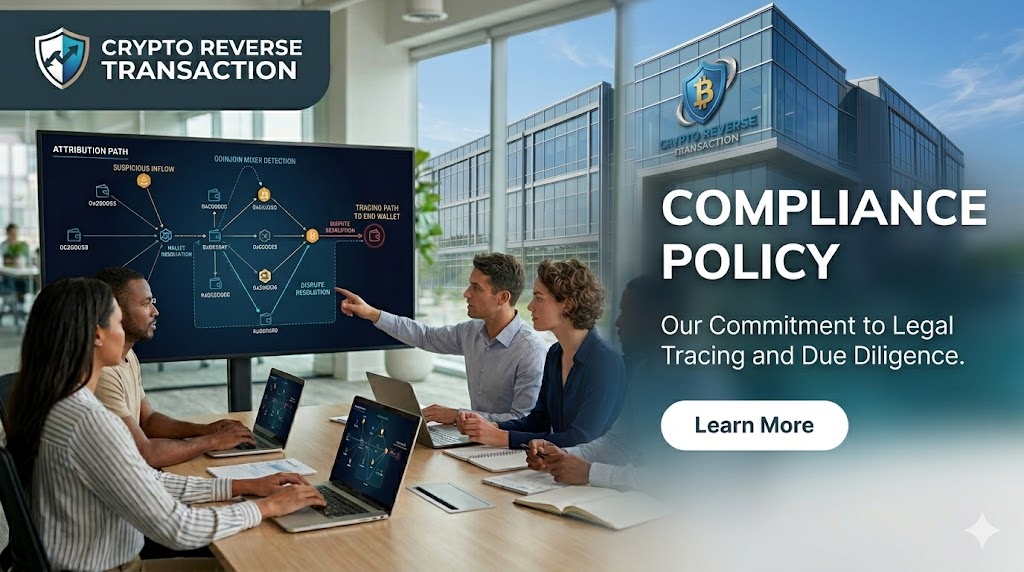
We continuously monitor all transactions and blockchain activity related to client cases for potential red flags or suspicious patterns.
Our monitoring includes but is not limited to:
Analysis of transaction sources and destinations
Identification of known scam or high-risk wallet addresses
Detection of unusual transaction patterns or rapid fund movements
Cross-referencing against sanctions lists and watchlists
Monitoring for use of mixers, tumblers, or privacy coins
Assessment of transaction size relative to client profile
Transactions that trigger red flags may be subject to enhanced due diligence or reporting obligations.
Important Note
We utilize blockchain forensic tools and third-party screening services to support our monitoring efforts.
Suspicious Activity Reporting
We are legally obligated to report suspicious activity to relevant authorities when detected. This includes but is not limited to:
Transactions suspected of involving proceeds from criminal activity
Activity that may be linked to money laundering or terrorist financing
Transactions involving sanctioned individuals or entities
Attempts to evade AML controls or provide false information
Unusual or unexplained large transactions inconsistent with client profile
Funds originating from known scam wallets or illicit sources
Reports are filed with the appropriate regulatory bodies in accordance with local laws. We are prohibited from disclosing the existence of such reports to any person involved in the reported activity.
Important Note
We cooperate fully with law enforcement and regulatory authorities in investigating potential financial crimes.
Record Keeping
We maintain comprehensive records of all client engagements, transactions, and compliance activities in accordance with applicable laws and regulations.
Records retained include:
• KYC documentation and identity verification records
• Transaction history and blockchain tracing reports
• Client communication and case files
• Suspicious activity reports (SARs) filed
• AML training records for employees
• Audit trails of compliance reviews
Records are retained for a minimum of [5-7] years from the date of case closure or as required by law, whichever is longer.
Important Note
All records are stored securely with access restricted to authorized personnel only.
Prohibited Transactions
We strictly prohibit the use of our services for any illegal activity, including but not limited to:
• Money laundering or terrorist financing
• Transactions involving sanctioned individuals, entities, or jurisdictions
• Proceeds from criminal activity (fraud, theft, drug trafficking, etc.)
• Transactions involving darknet markets or illicit goods
• Attempts to circumvent AML controls or provide false information
• Use of mixers, tumblers, or privacy coins to obscure transaction origins
We screen all client transactions and wallet addresses against global sanctions lists and watchlists maintained by:
• OFAC (Office of Foreign Assets Control)
• UN Security Council sanctions lists
• EU sanctions lists
• UK HM Treasury sanctions lists
• Other applicable regulatory bodies
Important Note
Clients who are identified as sanctioned or restricted persons will be immediately terminated and reported to relevant authorities.
Employee Training
All employees receive comprehensive AML and compliance training upon hiring and annually thereafter.
Training covers:
• Applicable AML laws, regulations, and sanctions requirements
• Identification of red flags and suspicious activity indicators
• Proper KYC and customer due diligence procedures
• Record keeping and documentation requirements
• Suspicious activity reporting protocols
• Consequences of non-compliance (legal and disciplinary)
Training completion is documented and maintained in employee files. Employees who fail to complete required training may be subject to disciplinary action, up to and including termination.
Important Note
We conduct periodic assessments to ensure ongoing compliance awareness and effectiveness.
Compliance Officer
We have designated a Compliance Officer responsible for overseeing our AML program and ensuring adherence to all applicable laws and regulations.
The Compliance Officer’s responsibilities include:
• Implementing and maintaining AML policies and procedures
• Reviewing and approving KYC documentation
• Monitoring transactions for suspicious activity
• Filing Suspicious Activity Reports (SARs) when required
• Ensuring employee training completion
• Acting as liaison with regulatory authorities
• Conducting periodic risk assessments
• Updating policies as regulations change
The Compliance Officer has direct access to senior management and the authority to halt or terminate any engagement that violates this policy.
Important Note
To contact our Compliance Officer, please use the information provided in Section 9 below.
Contact Information
For compliance-related inquiries or to report suspicious activity, please contact our Compliance Officer:
Important Note
Reports of suspicious activity may be made anonymously. We protect the confidentiality of reporters to the fullest extent permitted by law.